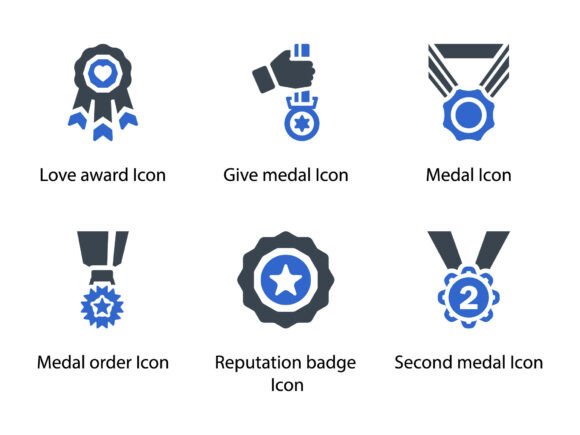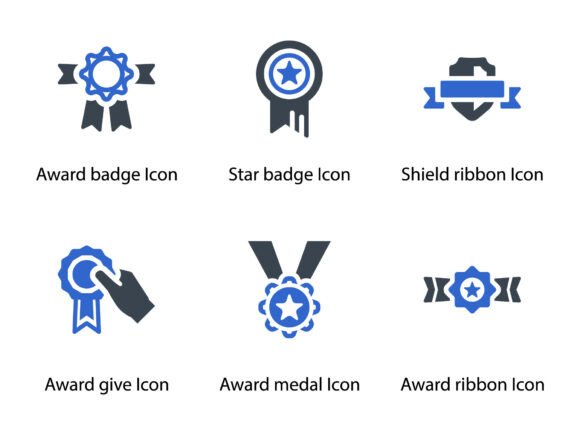
Awards Icon Set 2: Stitched Out and Ready for Real Projects
I’ve been eyeing the Awards Icon Set 2 for a few weeks now, and finally put it through its paces on standard mid-weight cotton and a few scrap tote bag panels. Right away, the glyph style caught my attention—it’s clean, modern, and deliberately uncluttered. That matters a lot when you’re thinking beyond a computer screen and imagining how these shapes will land on a sweatshirt or a baby bib. The set reads as celebratory without being childish, which immediately opens up doors for corporate client gifts, boutique merchandise, and personalized keepsakes.
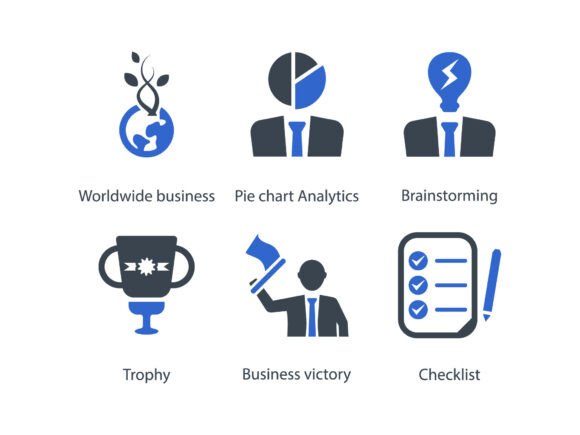
When you scroll through the icons—stars, ribbons, laurels, trophy silhouettes—you notice a consistent visual weight. Nothing feels overscaled or cramped, and that’s a solid sign for a set that will often get stitched at smaller hoop sizes. Many icon-based embroidery designs end up feeling like afterthoughts, but here the balance between filled areas and open negative space suggests someone actually tested how these shapes play on fabric. I wasn’t handed stitch count data or specific hoop requirements, so I strongly advise you to open each design in your embroidery software and double-check dimensions and stitch density before loading any fabric.
The Award Icon Style That Makes Handmade Items Look Polished
The personality of the Awards Icon Set 2 sits right at the intersection of minimalist and meaningful. There’s enough detail to communicate “win,” “congratulations,” or “top performer” without turning into a fussy mess that loses readability after a few washes. I especially like how the ribbon icons use subtle curvature to signal movement, while the trophy glyphs depend on sharp, crisp outlines. That immediately tells me as an embroidery product reviewer that I’d want to pair these with a smooth, mid-weight satin stitch and a backing that won’t let edges pull in.
For Etsy sellers and craft business owners, this is the kind of design that photographs beautifully. The glyph icons are inherently legible in thumbnail images, meaning your product mockups and printable mockup versions work double duty as marketing photos. I shot a few quick staged shots on a linen pillow cover, and even with indirect daylight, the embroidered icon read clearly from across a craft fair booth.
How It Stitches Out on Totes, Sweatshirts, and Patches
I test-stitched three icons on a mid-weight canvas tote bag, a standard cotton sweatshirt, and a twill patch blank. The tote bag was the most forgiving—canvas and dense cotton provide a stable foundation, and the fill stitch settled beautifully into the weave without sinking. The trophy icon, which uses a mix of thin linear elements and a small filled base, held its shape perfectly and didn’t produce any birdnesting on the back side, which tells me the stitch path logic is clean.
On the sweatshirt, I used a cut-away stabilizer and floated the fleece. The star icon and a laurel design both stitched without pulling, though I noticed the smallest detail on the laurel leaves—those tiny point serifs—required me to slow the machine speed by 15%. That’s not a flaw; it’s just the reality of embroidery design with delicate corners on textured fabric. If you’re running a tight production schedule for custom apparel, plan on an extra test run for any designs under 3 inches wide that you plan to stitch on loops or brushed fabric.
The patch application felt like the natural home for these awards icons. Using a heavy fusible stabilizer, the designs created a dense, professional badge that I could sew onto caps or backpacks. An embroidered patch made from the ribbon icon looked particularly strong—it had the tactile heft that customers associate with quality in small shop merchandise. If you sell at craft fairs or handle personalized gift orders, having a stack of these patches ready to go can seriously boost product value.
Fabric Challenges and Where to Use Extra Care
Not every project will love these icons equally. Thin fabric like lightweight jersey or sheer organza puts a lot of stress on satin stitch edges, and some of the icons in the Awards Icon Set 2 rely on narrow border elements that could tunnel if your hooping tension isn’t perfect. On stretchy fabric, even with a strong fusible interfacing, I saw slight shifting around the trophy’s handle detail. That’s fixable with a topper, but don’t skip that step.
Dark fabric also deserves extra attention. A few of the glyph icons have interior cutouts that expose the background fabric; if you’re stitching black thread on a navy sweatshirt, that crisp award silhouette might completely vanish. I tested the ribbon design in white on charcoal cotton, and the contrast was excellent. Before you commit to a embroidery project for a boutique order, run a quick mock-up on the exact fabric you’ll use. It’s worth checking how thread colors play against dark, heathered, or patterned backgrounds.
Curved surfaces like cap brims and structured hats ask for a smaller hoop size and a careful placement test. The laurel icon, in particular, has a wide footprint that might fight the curvature of a front panel. I’d recommend working with the smaller trophy or star icons on caps, and saving the larger ribbons for flat goods like kitchen towels and pillow covers.
A Real Project: Turning Awards Icon Set 2 into Boutique Keychains
I decided to build a small-batch souvenir idea around these designs. The concept was simple: embroider the trophy and star icons onto a stiff felt backing, trim them into mini medallions, and finish with a metal keyring. This kind of product needs an embroidery design that looks intentional at a tiny scale, and the Awards Icon Set 2 delivered. The filled areas on the trophy are dense enough to feel solid when handled, but not so over-stitched that the felt puckered.
I cut the felt into 2.5-inch circles, hooped with a sticky stabilizer, and stitched the trophy glyph dead center. Thread color was a muted gold on cream wool-blend felt. The finished keychain looked like something you’d find in a high-end stationery shop, and the response from a small test group on social media was immediate. People started asking if I’d do a “Best Dad” or “Employee of the Year” version. That’s the kind of buyer engagement you want from a design set—versatility that sparks new product ideas on the spot.
If you sell holiday embroidery, these icons could easily slip into Christmas ornament designs, New Year’s gift tags, or Mother’s Day keepsakes. The award theme naturally dovetails with celebratory moments, which increases the giftability of any personalized gift you create.
Designer Notes for Digital Embroidery File Users
Before you put the Awards Icon Set 2 into commercial embroidery rotation, run through a few quality checks. I always start by loading the file into my software and examining the stitch order. A poorly sequenced design can cause registration shifts, especially on quick-run machines, but these icons appear to have a logical flow. The nightmare scenario is a satin stitch border that stitches before its fill, causing the fabric to shift and the edge to land off-registration. That didn’t happen here, but I can’t verify every file version, so absolutely run a scrap test.
Check the stitch density in your software preview. A glyph icon design that was originally conceived for digital use—Icons and Graphics aren’t always built with embroidery physics in mind—may need density reduction if it’s overly complex. I didn’t notice excessive density in my test, but the star icon’s center point is narrow and could be prone to needle holes on loosely woven fabric. A slightly lighter density and a water-soluble topper solved that easily.
Licensing is the other practical concern. Always verify the copyright of any design assets before selling finished products. If the set comes with a standard commercial embroidery license, you’re clear for Etsy listings, craft fair inventory, and small shop merchandise. If the license is limited, keep it to personal gifts or sample work until you upgrade. I won’t assume anything here—check before you sell.
Boosting Giftability and Small Shop Appeal
One reason I keep coming back to award-themed embroidery designs is their psychological pull. A trophy or a star isn’t just decoration; it communicates recognition, effort, and personal connection. When you stitch this design onto a baby onesie for a “New Arrival” gift or onto a kitchen towel for a holiday cookie contest winner, you’re adding emotional weight. That’s a powerful tool for craft business owners who want to move beyond generic patterns.
The Awards Icon Set 2 fits nicely into a product lineup that already includes personalized items. I could see a set of three icons—star, ribbon, trophy—stitched across a sweatshirt left chest and right sleeve, creating a cohesive brand identity for a coaching business or a youth sports team. For handmade products, that kind of intentional branding raises the perceived value and encourages repeat purchases. Recognition and professionalism go hand in hand when you choose designs that align with a customer’s identity.
Final Thoughts on the Award Theme for Craft Businesses
As an embroidery product reviewer who also stitches for real clients, I judge a design set by how many projects it can realistically improve. The Awards Icon Set 2 is not a seasonal one-off; it’s a collection that stays relevant year-round. Whether you’re producing embroidered patch sets for a corporate event, adding a celebratory touch to custom apparel, or scaling up a holiday embroidery line, these glyphs hold their own. The style is confident without being shouty, and the clean outlines give you plenty of color flexibility.
Keep a clear stabilizer strategy in mind, especially for dense filled areas on lightweight clothes. Test on similar fabric first, and don’t skip the topper for textured surfaces. If you’re new to machine embroidery design, this set is approachable enough to build your confidence while still letting you create finished product that looks deliberate and well-branded. For experienced makers, it’s a reliable addition to your design assets library—compact, versatile, and ready for that next boutique project.