Hobbies Icon Set: A Designer's Real-Stitch Review
I pulled up the Hobbies Icon Set on a quiet Tuesday morning, coffee in one hand and a blank project brief in the other. A longtime client had just asked for a custom embroidered tote bag celebrating her knitting circle's tenth anniversary. She wanted something clean, symbolic, and instantly readable. Glyph icons seemed like the natural direction. As a designer who spends as much time around embroidery machines as design software, I needed to know whether this set would hold up beyond the screen and actually perform on fabric, thread, and stabilizer.
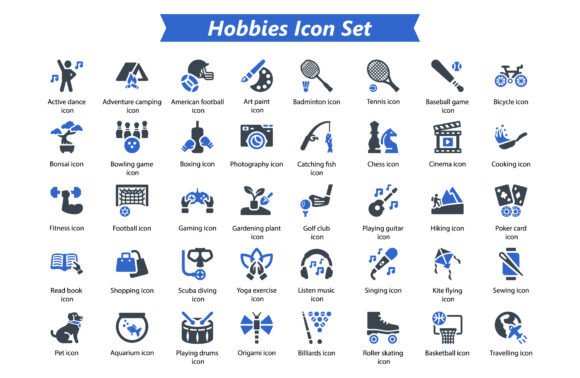
My first impression was straightforward. The Hobbies Icon Set describes itself as a beautifully designed glyph icon collection, the kind that works seamlessly across websites, presentations, and printed materials. That makes it a digital design asset first, not a pre-digitized embroidery file. For anyone jumping into this review hoping to download a stitch-ready PES or DST file, let me pause right there. This is not that. This is a Graphics pack in the Icons category, meaning it delivers clean vector or raster artwork you can incorporate into layouts, mockups, and branding materials. But for those of us who create machine embroidery designs from scratch or work with a digitizer, a well-drawn glyph icon set can be an exceptional starting point.
The Shape Language That Actually Stitches Well
What immediately stood out was the precision of the linework. Glyph icons, by nature, rely on consistent stroke weights, minimal decoration, and strong silhouette recognition. That kind of restraint translates surprisingly well into embroidery. Overly detailed icons with thin hairlines and tight gradients fall apart the moment a needle touches fabric. The Hobbies Icon Set appears built with the kind of disciplined geometry that digitizers dream about. Even stroke widths mean even satin stitches. Clear negative space means the design breathes, rather than turning into a muddy blob of thread.
I mentally tested a few hobby-themed icons in my head: a knitting ball, a paintbrush, a sewing needle, maybe a camera or a book. Symbols like these need to read clearly at around two to three inches wide on a tote bag pocket or a sweatshirt chest placement. The glyph style, when executed well, preserves legibility at small sizes because it removes everything unnecessary. That is exactly what you need for wearable embroidery, where thread bulk and fabric texture already add visual noise.
Where This Design Would Feel at Home
Let me anchor this in a real scenario. Imagine I am preparing a small boutique collection of personalized kitchen aprons for a craft fair. I need hobby-themed artwork that feels modern, gender-neutral, and sophisticated enough that someone would gift it to a baker, a gardener, or a woodworker without second-guessing the aesthetic. The Hobbies Icon Set hits that balance. It does not lean childish or clip-art heavy. It stays crisp, professional, and quietly charming.
For small business owners, that matters deeply. I have seen Etsy sellers lose sales because their product photos featured embroidery designs that looked busy or dated. A clean glyph style photographs beautifully on textured linen, canvas, and twill. It also pairs well with simple monogram text underneath, which opens up endless personalization possibilities. Think of an embroidered patch on a denim jacket, a corner accent on a pillow cover, or a tiny icon stitched onto a baby onesie cuff. Each use case benefits from the restraint that a well-designed icon set provides.
Product Types Where the Hobbies Icon Set Excels
- Tote bags and canvas shoppers: Flat weave, stable surface, ideal for crisp icon stitching
- Aprons and kitchen towels: The linear style complements culinary-themed hobby icons beautifully
- Sweatshirt chest placements: Small footprint, high visual impact, easy to center
- Embroidered patches: The glyph silhouette works perfectly for merrowed edge patches
- Pillow covers and home decor: Adds a subtle themed accent without overpowering the room
- Baby and children's items: Gentle, recognizable shapes that avoid overstimulation
- Holiday gift sets: Personalized hobby icons make gifts feel intentional and thoughtful
Fabric Realities and Technical Considerations
Here is where experience separates a pretty design from a practical one. When evaluating any icon set for embroidery potential, I always run through a mental checklist of what could go wrong. The Hobbies Icon Set being a glyph style works in its favor, but certain precautions still apply.
Small hoop sizes demand respect. If a particular icon has internal spacing that is too tight, those gaps close up on textured fabrics like fleece or terry cloth. Before committing, I would digitize a test icon and stitch it on a scrap of the actual fabric the client plans to use. Thread color contrast also requires honest assessment. A light gray icon on a cream linen apron might look elegant on screen but wash out entirely after stitching, especially under warm boutique lighting. I would recommend testing both high-contrast and tonal versions before finalizing any product photography.
Stretchy fabrics like jersey and performance wear introduce another variable. Glyph icons with long uninterrupted horizontal strokes can distort as the fabric pulls. Adding a layer of cut-away stabilizer helps, but the digitizer should also consider slightly shortening stroke endpoints or adding subtle corner compensation to maintain clean geometry. These are not flaws of the icon set itself, they are realities of translating any Graphics asset into a thread-based medium.
Fabrics and Surfaces Requiring Extra Care
- Thin or sheer fabrics: Glyph strokes may need denser underlay to prevent show-through
- Dark fabrics: Light thread colors on black cotton require higher stitch density for opacity
- Curved surfaces like caps: Icon placement on a cap front demands careful hoop positioning and possible size reduction
- Textured weaves: Linen, burlap, and slub cotton can break fine satin stitch edges
- Frequently washed items: Kitchen towels and baby clothes benefit from poly core thread for durability
Commercial Value and Buyer Perception
From a product strategy angle, the Hobbies Icon Set carries genuine appeal. Customers browsing handmade markets respond to clarity. An embroidered product featuring a recognizable hobby symbol, whether it is a sewing machine, a garden trowel, or a paint palette, triggers an emotional connection faster than abstract art. When someone shops for a personalized gift, they are scanning for that immediate match. A clean glyph icon communicates in a split second. That psychological speed translates directly into purchase confidence.
For craft business owners, consistency across product listings also builds brand trust. If your shop uses a cohesive icon style across tote bags, tea towels, and baby gifts, customers begin to recognize your visual signature. The Hobbies Icon Set supports that because the entire collection shares the same stroke philosophy. Your embroidery digitizer can maintain uniform stitch density and underlay settings across every icon, which streamlines production and reduces the chance of quality variation between products.
Licensing and Practical Boundaries
One note I always stress when reviewing Icons and Graphics assets for commercial embroidery use: confirm the license. Some icon sets permit use in physical products for resale, others restrict usage to digital display only. The product description states these are intended for websites, printed materials, presentations, and promotional use. That is broad, but I would still verify whether stitching them onto finished products for sale falls within the permitted scope before printing price tags or uploading new Etsy listings. This is not a limitation unique to this set, it is standard diligence for anyone running a small shop.
Also, remember that the Hobbies Icon Set arrives as a design asset, not a ready-made embroidery file. You will need to work with a digitizer or use embroidery software to convert the artwork into stitch data. That step introduces decisions about stitch types, pull compensation, pathing order, and trims. A skilled digitizer can preserve the elegance of the original glyph, while a rushed auto-digitize can ruin the proportions. Invest that step wisely.
Testing and Mockup Workflow
My own workflow when evaluating an icon set like this always involves a few non-negotiable steps. First, I open the artwork in black and white at actual embroidery size. I print it on paper and hold it up to a garment. Does the scale feel right? Is negative space preserved? Then I test it on both light and dark fabric mockups, adjusting thread colors until the visibility and mood align with the finished product vision. Only after that paper phase do I proceed to stitch-out on a fabric swatch with the correct stabilizer.
For the Hobbies Icon Set, I expect the testing phase to reveal what most clean glyph styles reveal: that the design stands up beautifully when properly prepared, and that its strength lies in its simplicity. Overcomplicating the digitizing with unnecessary fills or contour stitching would dilute what makes the original artwork work. Respect the line. Let the stitch follow the original stroke intent. That is how you honor both the designer's work and the final product your customer will hold.
The Verdict in Practice
If you silhouette-test an icon at arm's length and instantly know what hobby it represents, then the asset is doing its job. The Hobbies Icon Set passes that test. It supplies visual clarity, adaptable style, and enough variety to support a cohesive product line without feeling repetitive. Whether you are building a custom apparel collection, curating a set of handmade gifts, or designing boutique merchandise for a craft market booth, this glyph set offers a strong foundation.
Just walk into it with your eyes open. Understand that you are working with a Graphics asset, not a plug-and-play embroidery file. Budget time for digitizing. Test on your actual fabrics. Check your licensing. And once those boxes are ticked, you will have a versatile icon collection that stitches into something memorable, whether it lives on a tote bag, a baby blanket, a patch, or a holiday gift that makes someone feel truly known.